


 Shop 3, 1 Hunt Way, Pakenham, VIC 3810
 +61 416 888 312
Waxing is one of the most effective ways to achieve long-lasting smooth skin. However, for many people in Cardinia, Nar Nar Goon, Officer and beyond, the fear of discomfort can make appointments stressful. While some level of sensitivity is normal, there are practical ways to minimise pain and make your waxing experience far more comfortable. With the right preparation, technique, and aftercare, waxing can become much more manageable.
Here’s how to deal with waxing discomfort before, during, and after your session.
Prepare Your Skin Properly
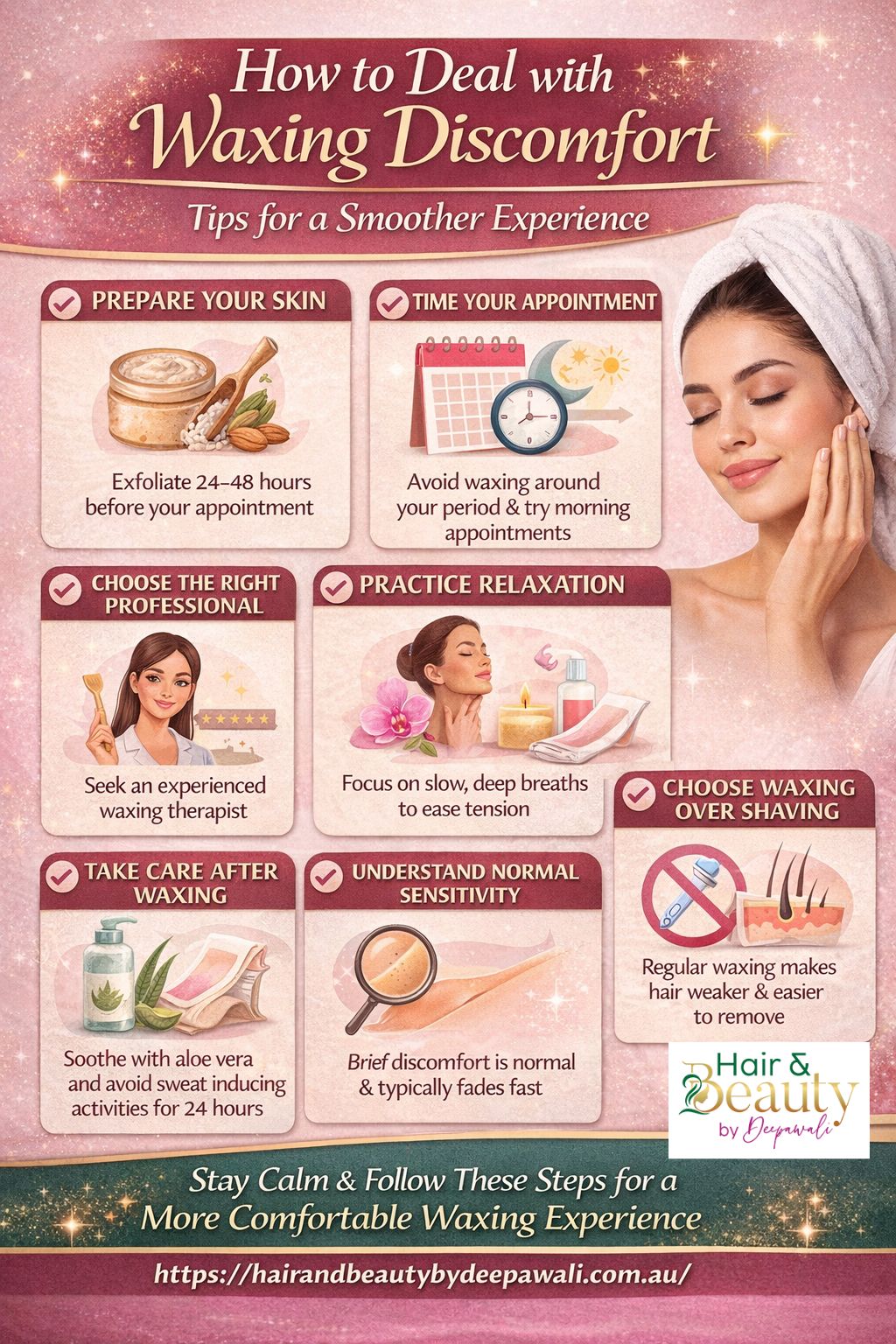
Preparation plays a major role in reducing waxing discomfort. Gently exfoliating the area 24–48 hours before your appointment helps remove dead skin cells and prevents ingrown hairs. This allows the wax to grip the hair more effectively instead of tugging at the skin.
Make sure your hair is the ideal length, before you head to a waxing salon in Cardinia, or any of the other suburbs. The length should be about 5–6mm. Hair that is too short may not adhere properly to the wax, while hair that is too long can increase pulling and discomfort.
Avoid caffeine and alcohol on the day of your appointment, as they can make your skin more sensitive.
Time Your Appointment Wisely
Your body’s pain tolerance fluctuates throughout your cycle. If possible, avoid booking waxing appointments just before or during your period, as skin tends to be more sensitive at that time.
Many people also find that scheduling appointments earlier in the day works better, as stress levels and fatigue can heighten sensitivity later on.
Use the Right Waxing Professional
An experienced waxing professional makes a significant difference. Proper technique, quality wax, and swift removal all help reduce discomfort. Skilled therapists know how to hold the skin taut, apply wax correctly, and remove it efficiently to minimise pain.
If you’re new to waxing, communicate openly about your concerns. A good therapist will guide you through the process and help you feel more at ease.
Practise Relaxation Techniques
Tension increases pain perception. Before and during your appointment in the waxing salon near Nar Nar Goon, focus on slow, deep breathing. Inhale through your nose and exhale through your mouth during wax removal. This simple technique can noticeably reduce discomfort.
Avoid clenching muscles in the treatment area. Relaxed skin allows for smoother wax removal with less resistance.
Consider Numbing Options
For highly sensitive areas, you may consider using a topical numbing cream 20–30 minutes before your appointment. Always consult your waxing professional before applying any product to ensure it’s suitable for your skin type.
Some people also find that taking an over-the-counter pain reliever (if medically appropriate) about 30 minutes before waxing can help ease sensitivity.
Choose Regular Waxing Over Shaving
It may seem counterintuitive, but regular waxing often becomes less painful over time. When you wax consistently, hair grows back finer and weaker. This means the wax removes hair more easily, reducing discomfort in future sessions.
Shaving between appointments can make hair coarser and increase sensitivity during your next wax.
Aftercare Is Just as Important
Post-wax care helps soothe the skin and prevent irritation. Immediately after waxing:
- Apply a calming gel such as aloe vera
- Avoid hot showers, saunas, or intense exercise for 24 hours
- Wear loose, breathable clothing
- Avoid touching or scratching the area
Keeping the skin moisturised and gently exfoliating a few days later can prevent ingrown hairs and reduce tenderness.
Understand That Some Discomfort Is Normal
Waxing removes hair from the root, so mild discomfort is natural. However, the sensation that you experience during a waxing service in Officer or any of the other suburbs is brief and usually subsides quickly. Many clients describe it as a quick sting rather than prolonged pain.
Over time, as your skin adjusts and hair becomes finer, the experience becomes significantly easier.
Building Confidence in Your Routine
The key to managing waxing discomfort lies in preparation, professional technique, relaxation, and consistent care. When done properly, waxing leaves skin smooth for weeks and reduces regrowth compared to shaving.
By following these practical steps, you can transform waxing from a stressful experience into a routine part of your self-care — with minimal discomfort and maximum confidence.
Book a Professional Waxing Session Now
To book a waxing session near you, call Hair & Beauty by Deepawali, your trusted beauty parlour today. Dial 416 888 312 or click the Get Appointment button at the top and submit your details so we can get back to you.